Can a Period Underwear Manufacturer Create Seamless Period Underwear?
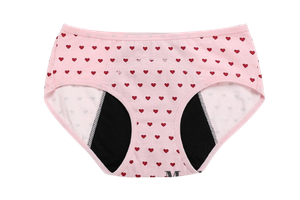
Yes. A period underwear manufacturer can produce seamless period underwear, but the body, gusset, membrane, bonding process, and wash durability have to be developed as one garment. Seamless bodies are commonly made on circular knitting machines, while the absorbent zone may use 3–5 functional layers and bonded edges instead of raised stitching. Depending on the construction, underwear may be designed for roughly 5–40 mL or more of fluid capacity. Development also has to account for fabric stretch that can exceed 30%, membrane thickness below 0.1 mm, repeated laundering, edge adhesion, rewet, fit, and leakage under pressure.
Conventional underwear can be assembled from several cut panels joined by side seams, elastic stitching, and a sewn gusset. Seamless construction changes that process. Circular knitting machines can produce most of the body as one tube, reducing cut-and-sew operations while allowing different knit structures around the waist, hip, seat, and leg areas. Nylon/elastane or polyamide/elastane fabrics frequently contain around 8–25% elastane, depending on the required stretch and compression.
Period protection cannot normally be produced by removing seams alone because the crotch area still needs fluid acquisition, storage, and leak resistance. A period underwear manufacturer therefore has to combine a highly stretchable underwear body with a less stretchable absorbent package without creating puckering, thick edges, or unstable fit.
A typical construction can contain three to five functional components. The skin-contact layer moves liquid away from the surface; a distribution layer spreads it across a wider area; the absorbent layer stores fluid; a membrane reduces leakage; and the outer fabric gives the garment its finished appearance. Some fabrics combine two functions, allowing a four-layer design to perform similarly to a thicker five-layer structure.
More layers do not automatically provide better performance. Adding one 1 mm textile layer can increase crotch thickness while also increasing drying time and reducing flexibility.
Absorbency therefore needs to be specified in milliliters rather than descriptions such as “heavy flow.” A light-use seamless brief may be developed around approximately 5–10 mL, while moderate products can target roughly 15–25 mL. Higher-coverage products can move toward 30–40 mL or more, although the laboratory method used to obtain the number matters as much as the number itself.
An unrestricted saturation test may show how much liquid a fabric can hold when fully soaked, but a wearer does not use underwear under unrestricted laboratory conditions. Fluid arrives gradually, pressure changes while sitting or walking, and the garment remains stretched around the body. A useful product evaluation therefore measures acquisition speed, retention, rewet, leakage, and usable capacity rather than reporting only maximum saturation.
The body fabric creates another engineering problem. A seamless knit may stretch 50% or more in one direction, while a laminated absorbent section may stretch far less. If a 100 mm fabric sample extends to 150 mm but the gusset laminate extends only to 115 mm, the two areas will react differently during dressing and movement.
That difference can pull the crotch inward, cause the laminate to wrinkle, or concentrate stress along bonded edges. Manufacturers can adjust knit density, gusset geometry, adhesive width, laminate orientation, and elastane distribution to reduce the mismatch. Stretch compatibility often matters more than simply making the garment thinner.
Bonding can replace part of the traditional stitching, but it introduces its own process controls. Heat-activated adhesive films may be only fractions of a millimeter thick, yet their performance depends on temperature, pressure, dwell time, fabric finish, and membrane chemistry. Too little heat can produce weak adhesion; too much can deform elastane or damage a thin waterproof film.
A bonded sample that looks clean after one wash still provides little information about long-term use. ISO 6330, first published in 1984 and updated several times since, provides standardized domestic washing and drying procedures used for textile testing. Brands may choose 20, 30, 50, or more wash cycles according to their internal durability requirement rather than treating one cycle as proof of washable performance.
After repeated laundering, technicians can check edge lifting, bubbling, adhesive migration, membrane separation, shrinkage, and permanent distortion. If a bonded section begins separating by even 2–3 mm around the gusset edge, fluid may reach an area that was not intended to become wet.
| Development item | Typical design range or test focus |
|---|---|
| Elastane content | About 8–25%, depending on body fabric |
| Functional gusset structure | Commonly 3–5 components |
| Light-use capacity | Around 5–10 mL |
| Moderate-use capacity | Around 15–25 mL |
| Higher-capacity products | Around 30–40 mL or more |
| Wash validation | Often 20–50+ cycles |
| Body-fabric extension | Can exceed 30–50% |
| Bonded edge inspection | Peeling, bubbling, curling, delamination |
Fluid distribution is equally important because 20 mL held across a broad absorbent zone behaves differently from 20 mL concentrated within a small central area. If liquid spreads only 50 mm before the local material becomes saturated, side leakage can occur even though dry absorbent material remains elsewhere in the gusset.
Designers can address that by changing fiber structure, hydrophilic treatment, layer orientation, or the dimensions of the acquisition area. The waterproof layer can also extend several millimeters beyond the absorbent material to provide a margin around the storage zone without increasing absorbent thickness across the whole crotch.
Membrane choice influences both leakage and comfort. Thin polyurethane-based films are widely used in washable absorbent garments because they can provide a liquid barrier while remaining flexible. Film thickness can be below 0.1 mm in some textile laminates, although the final specification depends on hydrostatic resistance, stretch, lamination method, and intended wear time.
Breathability should not be described only with words such as “breathable.” Water-vapor transmission, air permeability, and hydrostatic resistance measure different properties. A material can resist liquid penetration while still allowing some moisture vapor to pass, but adding adhesive across 100% of the surface may change the result compared with testing the membrane by itself.
Fit also changes fluid performance. A medium-size sample cannot fully validate a range extending from XS to 3XL because crotch width, hip circumference, rise, and fabric tension do not increase at exactly the same rate. A protective area positioned correctly on a 100 cm hip measurement may sit differently when the body circumference changes by 20–30 cm.
For that reason, size-set fitting normally needs more than one body size. Testing a lower, middle, and upper size gives better information about gusset position, leg opening pressure, waistband recovery, and rear coverage. Larger sizes may require changes to gusset width or length rather than simple proportional enlargement.
Leg openings deserve the same attention because removing visible stitched elastic does not remove the need for recovery. Raw-cut, bonded, or knitted leg edges have to stay against the body without cutting into it. A fabric that loses 10% of its recovery after repeated washing may begin to shift during walking even though the garment still looks acceptable when laid flat.
Seamless period underwear intended for sports has stricter movement requirements. During running, cycling, or gym use, repeated hip flexion and moisture can increase movement between the body fabric and gusset. A construction suitable for eight hours of normal office wear may therefore need different knit tension or gusset anchoring for active use.
Material chemistry also requires documented control because period underwear remains in prolonged skin contact. Depending on the sales market, brands may request testing against restricted-substance requirements, retailer standards, OEKO-TEX criteria, EU REACH restrictions, or individual chemical specifications. In 2023 and 2024, PFAS in menstrual products received increased regulatory and consumer attention in the United States, making fluorinated treatments an important material-selection question for many brands.
Testing should apply to the production materials rather than only an early prototype. Changing an adhesive, membrane, surface finish, dye supplier, or absorbent fabric after approval can change chemical and physical performance even if the garment dimensions remain identical.
Production control begins before sewing or bonding. Fabric weight, usable width, shrinkage, color variation, stretch, and recovery can be checked by incoming lot. A 3% difference in shrinkage between the body fabric and gusset laminate can create visible rippling after washing, particularly when large bonded surfaces prevent the materials from relaxing independently.
Process tolerances also need to cover bonding temperature, pressure, time, gusset placement, finished measurements, and adhesive width. A gusset shifted 10 mm forward may still pass a general visual inspection while giving the wearer less rear coverage than the approved fitting sample.
Manufacturers can reduce variation by using positioning templates, bonding fixtures, measurement checkpoints, and lot-based wash testing. For a production run of 10,000 pieces, checking only the first finished sample gives very little information about changes caused by fabric rolls, machine settings, operator handling, or adhesive batches.
Sampling plans can instead divide production into lots and define inspection levels before shipment. AQL systems based on ISO 2859-1 are widely used for apparel inspection, with brands selecting acceptance limits according to defect type and product requirements. Functional failures such as membrane damage should generally be treated differently from minor cosmetic variation.
Cost also changes with construction. Seamless knitting can reduce some sewing operations, but specialized yarns, circular knitting time, bonded gussets, technical membranes, absorbent fabrics, testing, and slower quality inspection add expense. A product with four technically selected layers may therefore cost more than one with five low-cost fabrics.
Order volume affects the calculation because yarn dyeing, knitting setup, bonding dies, labels, packaging, and testing contain fixed costs. Moving from a 1,000-piece development order to 10,000 pieces spreads part of those costs across more garments, although fabric specification and absorbent structure still account for a large part of the unit price.
For brands comparing suppliers, a quote should state fabric composition, GSM, elastane percentage, gusset dimensions, tested capacity, layer structure, membrane type, bonding method, wash requirement, size range, and test method. Two factories quoting a “20 mL seamless brief” may be offering materially different products if one reports saturation capacity while the other reports capacity under pressure.
A good development sequence therefore starts with measurable requirements. The brand can define a 20 mL target, maximum acceptable thickness, 30- or 50-cycle wash requirement, intended garment sizes, use period, outer clothing type, and target market before requesting the first sample.
The first prototype can then be checked for absorption, leakage, wet feel, drying, stretch, bond integrity, and fit. A second round can change only the variables that failed instead of replacing the whole construction. If 12 wear-test samples show that rear leakage occurs in three units while laboratory capacity remains acceptable, increasing total absorbency may be less useful than changing distribution or rear gusset coverage.
Once the construction passes wear, wash, fit, and laboratory checks, the approved sample becomes the production reference. Fabric lots, bonding settings, gusset placement, finished dimensions, and functional tests can then be compared against that reference throughout manufacturing rather than judged only by appearance.